Under-eye filler is the treatment I am most careful about, and the one I turn down most often. The skin here is thin, the area moves constantly, and it holds fluid in a way the rest of the face does not. Done well, it reads as rest. Done poorly, it reads as puffiness, and it can sit there for a long time.
I use Restylane Eyelight. I used Teosyal Redensity 2 for years, and over time I found it drew in more water than I wanted in an area already prone to holding it. Eyelight behaves more predictably for me. In the under-eye, predictable matters more than almost anything else.
I place it with a cannula, in a deep plane. A cannula moves through tissue rather than cutting across it, so there is less trauma to the small vessels sitting in this area. I have seen what extended bruising under the eyes can do to skin tone, and that discolouration can last for years. Saving a few minutes with a needle is not worth that risk.
Volume is small. Typically 0.25 mL per side, placed deep, then assessed before anything more is added.
A consultation is mandatory for this treatment. Not everyone is a candidate, and I will tell you honestly if you are not.
Real patients treated with the DEKA Tetra CO2 protocol.
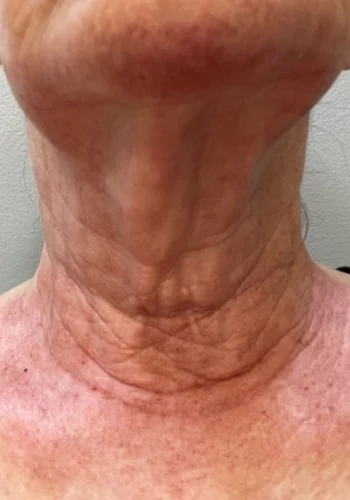
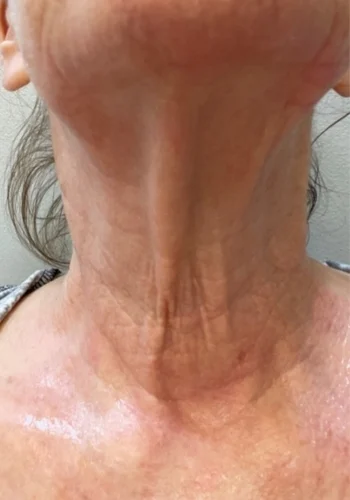
Before | 6 months after 1 treatment
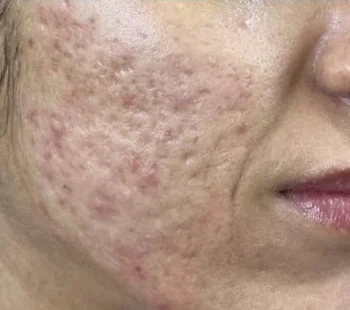
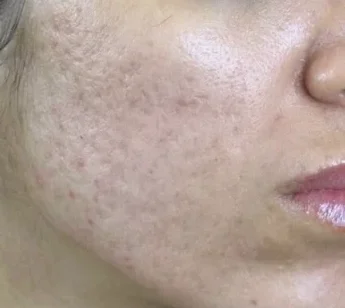
Before | 8 months after 2 treatments

What to know
This works when the problem is genuine hollowing. If there is a real volume deficit under the eye and the shadow you see is a shadow cast by that hollow, filler addresses the cause. Light falls differently once the hollow is filled, and the darkness lifts because the structure changed, not because anything was covered.
Best for: True tear trough hollowing and volume loss under the eye
Volume: Typically 0.25 mL per side
Technique: Cannula, deep plane
This is the part I want to be direct about, because it is where under-eye filler goes wrong.
Malar festooning is a no. So is very thin skin, where product shows through rather than sitting invisibly.
The group I turn away most often is people whose under-eyes are genuinely dark but not hollow. Allergic shiners are the common version: the darkness is vascular or pigmentary, not structural. Filling a hollow that is not there does not fix that darkness. It adds volume to an area that did not need it, and now you have both problems.
If that is what I see at your consultation, I will say so and we will talk about what actually helps.
Not suitable for: Malar festooning, very thin under-eye skin, darkness without hollowing
Most people need about two sessions to reach full resolution. I plan for one to start, because I would rather place a conservative amount, let it settle, and build than try to correct an overfilled under-eye later.
Correction in this area is genuinely difficult, and that shapes how I dose.
Sessions: One to start, approximately two for full resolution
Approach: Conservative first pass, assess, then build
Two reasons, and they are related.
The cannula is about trauma. Its blunt tip pushes past vessels instead of through them, which lowers the chance of significant bruising and of the long-term discolouration that can follow it.
The deep plane is about how the product behaves. Placed on bone, under the muscle, it supports the structure without sitting where it can be seen or felt through thin skin.
Why it matters: Lower bruising risk, less chance of visible or palpable product